
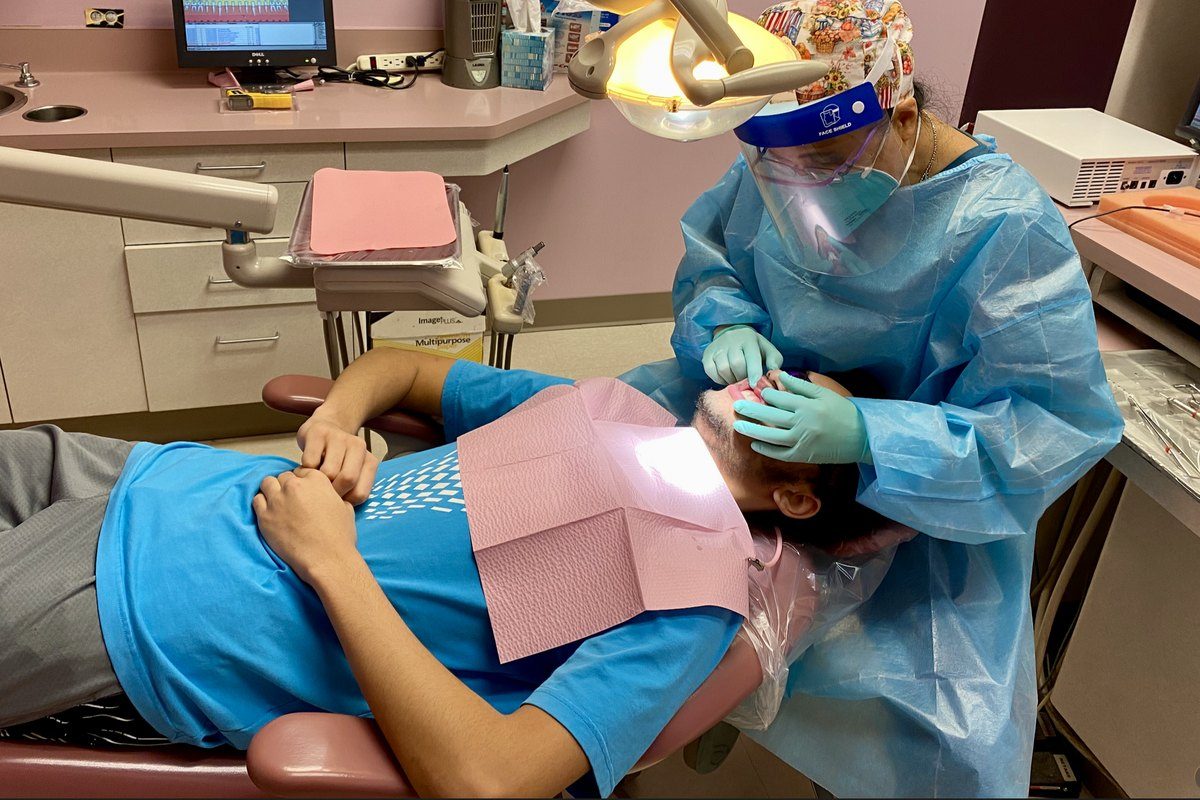
People with autism may have challenges during dental and medical exams. These healthcare experiences can become sources of stress and anxiety for both individuals with autism and their caregivers. Our research team continues to explore how the inclusion of Telehealth, in collaboration with dental and medical professionals, can promote comfort during exams. Our studies have demonstrated the effectiveness of a virtual intervention component for both dental (Berens et al., 2022) and medical examinations (Hoang et al., 2024).
Teaching children to feel comfortable during healthcare visits is a vital skill that is often overlooked in educational and early intervention settings. While skills like toilet training are typically prioritized during preschool years, cooperation during medical and dental procedures is equally important for lifelong health. Some children with autism and other developmental disabilities may struggle with healthcare visits, which can have negative consequences. When a child refuses dental care, for example, this can result in untreated issues that lead to pain, infections, and more complex health problems. By supporting the development of these skills early, we can create a foundation for better health outcomes throughout life. Our research has shown that adults with intellectual and developmental disabilities struggle to access preventative dental care without appropriate behavioral support (Berens et al., 2022).
Several approaches can help children and adults with autism increase comfort with medical and dental visits. One fun strategy includes role-play scenarios of mock exams where children pretend to visit the dentist or doctor can significantly reduce anxiety as this approach allows them to become familiar with the environment, tools, and procedures in a safe and controlled setting. During the mock examinations, a parent or educator uses toys and pretend medical equipment creating opportunities for practice. It's important to note that the patient has a positive experience and is never restrained or forced to do any actions. This strategy has been successful with many children and adults with autism. However, if compliance is difficult, a behavior analyst can design a more complex intervention to support the specific needs of the individual.
Our work at the University of Houston-Clear Lake, conducted in collaboration with Baylor College of Medicine and UT School of Dentistry, demonstrates the significant benefits of incorporating Telehealth. Telehealth helps to reach families regardless of location, guiding practicing healthcare visit skills at home. Through virtual sessions, behavior analysts guide parents with strategies, enabling them to take an active role in preparation. Virtual sessions can be scheduled at convenient times for families, making it easier to incorporate practice into daily routines. In addition, behavior analysts can support dental professionals and healthcare providers through telehealth (Matteucci et al., 2022), to understand and accommodate the needs of patients with autism. Similar approaches have been applied successfully to training medical students to work with patients with other neurodevelopmental disabilities (Hoang et al., 2024).
Preparation for healthcare visits should begin before the appointments, with regular practice sessions using toy medical equipment. Positive reinforcement like praise and access to preferred items can be used when children demonstrate cooperation during practice sessions. When possible, families may benefit from visiting the clinic before the actual appointment to familiarize the child with the environment. Bringing comfort or favorite items to appointments can provide additional support for the individual during stressful moments. Many families find it helpful to schedule appointments during less busy office hours to minimize wait times and sensory overload. It's also beneficial to share effective strategies and specific accommodations with healthcare providers before visits so they can better support the individual's needs. These strategies align with the behavioral interventions we've implemented in our interdisciplinary programs for both dental (Berens et al., 2022) and medical contexts (Hoang et al., 2024).
Helping children with autism become comfortable with dental and medical visits is a critical component of their overall health care. By using play-based approaches and inclusion of Telehealth technology, we can create supportive environments that promote positive healthcare experiences. By prioritizing compliance skills early, we help children and their families navigate healthcare with greater confidence and comfort, leading to better lifelong health outcomes. Our research across multiple settings demonstrates that with proper training and support, healthcare professionals can significantly improve the experience for patients with autism and developmental disabilities (Berens et al., 2022; Matteucci et al., 2022; Hoang et al., 2024).
References
Berens, J. C., Tsami, L., Lerman, D. C., Matteucci, M., Fray, D. F., Warner, B. F., Keehan, L. A., Staggers, K. A., & Peacock, C. (2022). Preliminary results of an interdisciplinary behavioral program to improve access to preventative dental care for adults with intellectual and developmental disabilities. Intellectual and Developmental Disabilities, 60(6), 504–519. https://doi.org/10.1352/1934-9556-60.6.504
Hoang, A. Q., Lerman, D. C., & Nguyen, J. T. (2024). Virtual training of medical students to promote the comfort and cooperation of patients with neurodevelopmental disabilities. Journal of Autism and Developmental Disorders, 54, 1249–1263. https://doi.org/10.1007/s10803-023-05896-w
Matteucci, M., Lerman, D., Tsami, L., & Boyle, S. (2022). Remote training of dental students and professionals to promote cooperative behavior in patients with intellectual and developmental disabilities. Journal of Developmental and Physical Disabilities, 35(1). https://doi.org/10.1007/s10882-022-09844-x