
Early diagnosis is vital for children with autism. When families can access screening and diagnosis early, they have access to early intervention that leads to better outcomes, including improvements in language development and social behavior (Estes et al., 2015). However, in many parts of the world, families don't have access to professionals who can help. The children go undiagnosed, and parents are alone, with minimal resources or guidance.
According to the latest CDC report published in April 2025, one in every 31 children has autism (Shaw et al., 2025). Many children never receive the support they need, not because it doesn't exist, but because they can't reach it.
We're planning towards changing that.
On April 2, 2026, World Autism Awareness Day, we're organizing a multi-continental event, "Spark a Spectrum of Possibilities." With hundreds of organizations and volunteers, we come together; professionals, healthcare workers, doctors, teachers, university students, professors, policy makers, celebrities, and families across Nigeria, Kenya, Zambia, the Philippines, Rwanda, the US, and beyond, to provide free autism screenings and resources to families who need them.
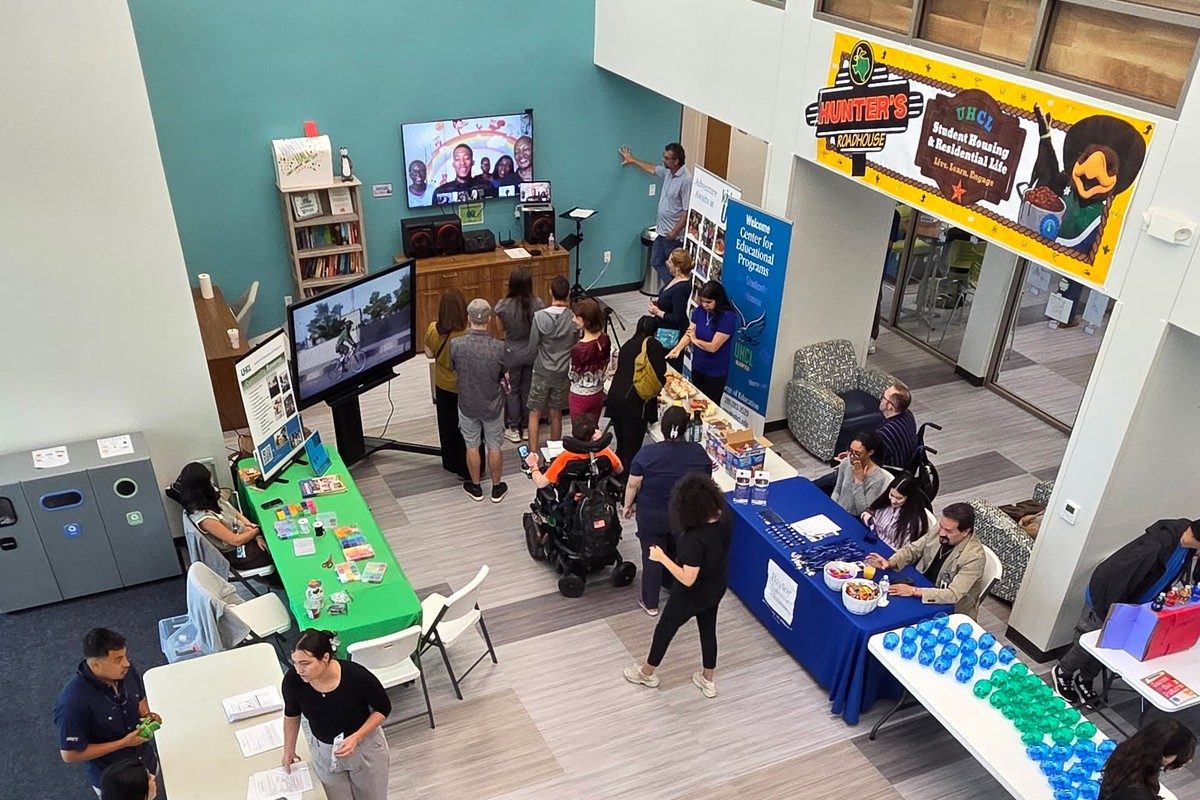
We're creating spaces where families can meet one-on-one with specialists, ask questions, and receive guidance. The host centers are setting up resource fairs where parents can learn about tools and support. A celebration with games, activities, free food and drinks, and prizes where autism is celebrated.
The event will be connected through a live broadcast, led by autistic individuals. They will show us the way. To lead. To inspire.
In sub-Saharan Africa, one major barrier to research and management of autism has been the scarcity of validated screening tools and limited awareness of the condition (Abubakar et al., 2016; Bakare et al., 2009). Many families face inadequate diagnostic and assessment resources, and the stigma associated with developmental disorders prevents children from receiving timely support (Mayema & Malcolm-Smith, 2024). Research indicates that early identification can improve long-term developmental outcomes for children with autism, yet reduced support for families who do receive a diagnosis limits early identification and intervention (Mayema & Malcolm-Smith, 2024).
At this early phase, we are confirming host centers across multiple countries. We need to raise funding to make this happen. We need volunteers, hundreds of them, to learn and conduct the screenings, coordinate logistics, manage communications, and build partnerships.
But more than anything, we need people to care and join us.
We need NGOs and organizations to collaborate and host centers. We need state, federal, and private schools to join us and help us reach families. We need specialists to donate their time. We need community members to spread the word.
Movie stars and celebrities can lend their voices to public attention. Together, we will destigmatize autism and celebrate neurodiversity. Tell families: you're not alone, and your child's differences are not something to hide.
We want April 2nd to become a tradition, a day when the world comes together for autism awareness, to support and celebrate.
We need
Funding. To screen more children, train more volunteers, and reach more families.
Collaborators. Whether you're a hospital, university, therapy center, or community organization, if you can host a screening center, we want to work with you.
Volunteers. Professionals and community members to support the events.
Visibility. Share this. Talk about it. Help us reach the families who need to know this event exists.
How to Get Involved
If you want to sponsor, partner, or volunteer, reach out to us at sekinah@sparkaspectrum.org or loukia@abaworld.org. We have specific teams working on center recruitment, fundraising, celebrity outreach, marketing, and event operations. There's a place for everyone.
Spark a Spectrum of Possibilities is an initiative of ABA World. Learn more at[ https://abaworld.org/spark-a-spectrum](https://abaworld.org/spark-a-spectrum).
References
Abubakar, A., Ssewanyana, D., de Vries, P. J., & Newton, C. R. (2016). Autism spectrum disorders in sub-Saharan Africa. The Lancet Psychiatry, 3(9), 800-802.[ https://doi.org/10.1016/S2215-0366(16)30138-9](https://doi.org/10.1016/S2215-0366(16)30138-9)
Bakare, M. O., Ebigbo, P. O., Agomoh, A. O., & Menkiti, N. C. (2009). Knowledge about childhood autism and opinion among healthcare workers on availability of facilities and law caring for the needs and rights of children with childhood autism and other developmental disorders in Nigeria. BMC Pediatrics, 9(1), 12.[ https://doi.org/10.1186/1471-2431-9-12](https://doi.org/10.1186/1471-2431-9-12)
Estes, A., Munson, J., Rogers, S. J., Greenson, J., Winter, J., & Dawson, G. (2015). Long-term outcomes of early intervention in 6-year-old children with autism spectrum disorder. Journal of the American Academy of Child and Adolescent Psychiatry, 54(7), 580-587.[ https://doi.org/10.1016/j.jaac.2015.04.005](https://doi.org/10.1016/j.jaac.2015.04.005)
Mayema, R. S., & Malcolm-Smith, S. (2024). The unmasking of autism in South Africa and Nigeria. Neuropsychiatric Disease and Treatment, 20, 1005-1024.[ https://doi.org/10.2147/NDT.S443925](https://doi.org/10.2147/NDT.S443925)
Shaw, K. A., Williams, S., Patrick, M. E., Valencia-Prado, M., Durkin, M. S., Howerton, E. M., Ladd-Acosta, C. M., Pas, E. T., Bakian, A. V., Bartholomew, P., Nieves-Muñoz, N., Sidwell, K., Alford, A., Bilder, D. A., DiRienzo, M., Fitzgerald, R. T., Furnier, S. M., Hudson, A. E., Pokoski, O. M., . . . Agosto-Rosa, H. (2025). Prevalence and early identification of autism spectrum disorder among children aged 4 and 8 years Autism and Developmental Disabilities Monitoring Network, 16 sites, United States, 2022. Morbidity and Mortality Weekly Report, 74(2), 1-21.[ https://doi.org/10.15585/mmwr.ss7402a1](https://doi.org/10.15585/mmwr.ss7402a1)