
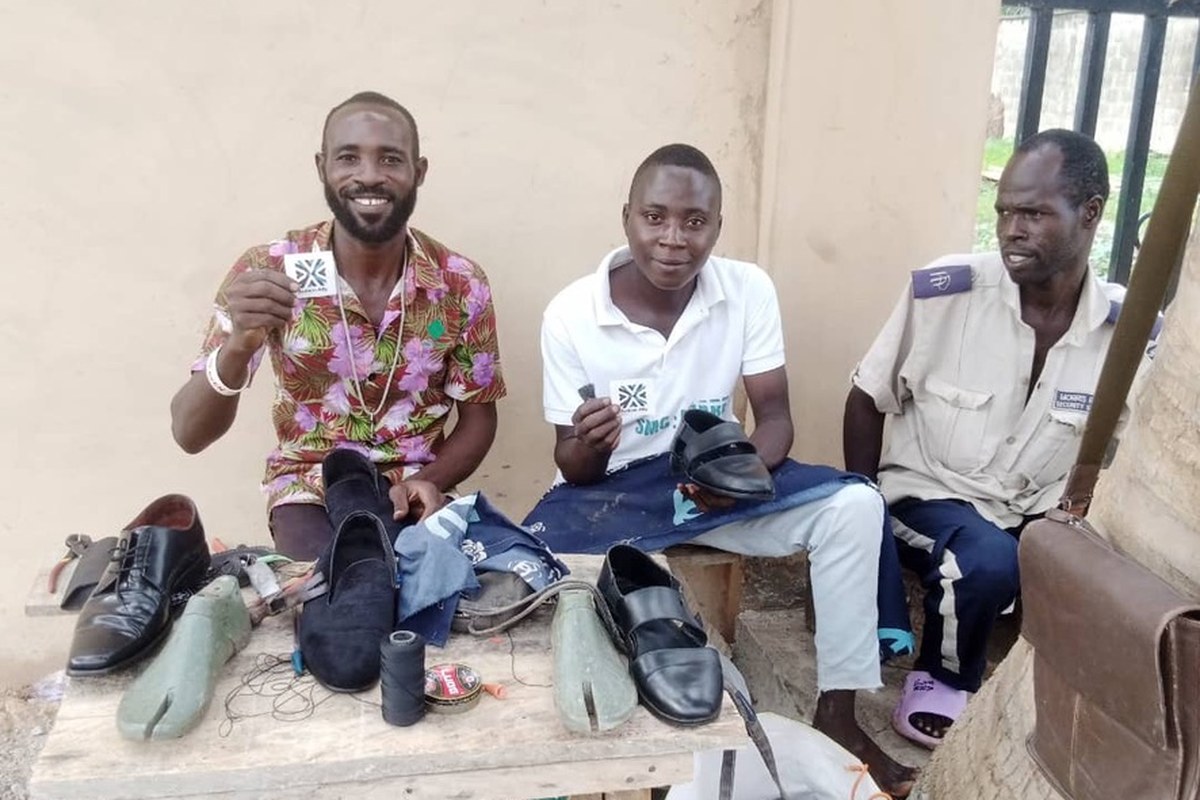
In a roadside stand at the edge of Lagos, shoes line a simple wooden table where two individuals work with purpose. This humble workshop tells a powerful story of acceptance, intuition, and unconditional support that transcends the traditional understanding of autism.
His future seemed uncertain when Jibrin moved from Gombe State to Lagos with his uncle Abubakar in 2020 after his father's death. His mother had abandoned him at age four, around the same time he stopped using the few words he communicated vocally. People in the community struggled to understand him and he did not have a diagnosis or explanation for his differences.
What Jibrin experienced was more than just being "different." His behavior patterns, communication challenges, and intense focus on specific objects, particularly leather footwear, were indicators of something deeper. Yet without access to developmental specialists or autism resources, his condition remained unnamed, with Abubakar searching among traditional healers for answers.
The roadside stand in the image reveals the beautiful simplicity of their solution. Surrounded by shoes in various states of repair, the workspace has become more than just a source of income, it's a place of belonging and purpose. Jibrin's fascination with leather footwear, once seen as merely unusual, has transformed into a valuable skill. His fingers move with precision over the materials, crafting and repairing with attention to detail.
Unlike many who dismissed Jibrin or suggested institutionalization, Abubakar recognized potential where others saw only limitation. He noticed how his nephew's hands told stories that his voice could not. What began as Abubakar's security guard job with shoe repair as a side hustle evolved into a specialized craft with Jibrin at its center.
The workshop pictured shows the physical manifestation of their journey, a simple wooden table, basic tools, and leather works in progress. Yet behind this modest setup lies an extraordinary story of human connection. Heroes like Abubakar exist in our communities, often unrecognized and unsupported. They make profound differences in the lives of those with developmental differences including autism without fanfare or formal training. These everyday heroes deserve not just our recognition but also our active support. Communities must create systems that identify and assist such caregivers, offering respite care, connecting them with resources, providing financial support for vocational training, and ensuring healthcare access.
True inclusion begins with these efforts. When we support the Abubakars in our communities, we strengthen the foundation for neurodiversity acceptance. Local businesses can provide market opportunities for the crafts created. Schools can facilitate peer interactions that respect different communication styles. Healthcare providers can offer sliding-scale assessments for families without formal diagnoses.
The image shows more than a roadside shoe repair stand, it captures a moment of dignity and purpose. Jibrin has found his place in a world that often overlooks those who communicate differently. Through his uncle's support, he develops skills that transform his interests into meaningful work. Their story reminds us that sometimes the most powerful therapy comes not from clinical settings but from being truly seen, accepted, and guided toward one's natural strengths.
On this World Autism Awareness Day, let us recognize that awareness must extend beyond understanding autism itself to support the quiet heroes who create spaces of belonging for those on the spectrum. In the smiles and proud gestures of those in the photograph, we glimpse the impact of one person's decision to build a world around someone's differences.